


How to Choose a Laser Cutting Machine for Metal Fabrication
Choosing a laser cutting machine starts with the work your factory needs to deliver. Materials, thicknesses, part geometry, quality requirements, and production volume should guide the decision before headline power or speed figures do.
A sheet metal laser cutting machine should fit your regular workload while leaving practical room for growth. This guide focuses on flat-sheet processing. Tubes, structural profiles, and three-dimensional components require a separate assessment of equipment and handling requirements.
A useful shortlist connects each metal fiber laser cutting machine configuration to your orders, installation conditions, and production targets.
What Production Requirements Should You Define Before Choosing a Laser Cutter?
Which Materials, Thicknesses, and Part Sizes Do You Process?
Start with a representative set of recent orders. Record material grades, thicknesses, sheet sizes, quantities, and delivery requirements. Include drawings with small holes, narrow slots, complex contours, and other features that may influence processing.
Define what makes a part acceptable. A component going directly to assembly may have different edge requirements from one that will undergo grinding or welding. Specify critical dimensions, surface requirements, and permitted secondary operations before suppliers prepare samples.
Use the same requirement profile for every quotation.
|
Production requirement |
Selection implication |
Evidence to request |
|
Material grades and thickness mix |
Power and cutting process |
Samples using representative materials |
|
Sheet and finished-part sizes |
Working area and handling arrangement |
Nesting examples and layout drawings |
|
Edge and dimensional requirements |
Process capability and finishing work |
Inspected sample parts |
|
Batch sizes and shift pattern |
Capacity and automation needs |
Complete production-cycle assessment |
Separate Regular Work from Occasional Orders
Do not let one unusual job define the investment. A cabinet manufacturer processing mostly thin sheet may occasionally receive a thick-plate order. Buying capacity for that exception could change the equipment, utilities, and investment required.
Compare the frequency and value of those orders with alternatives such as outsourcing. Equally, avoid selecting a machine that leaves a predictable portion of regular production outside its practical capacity.
How Should You Choose Laser Power and Bed Size?
How Can You Evaluate Laser Power Using Finished Parts?
Power matters, but it does not describe the complete cutting process. Material grade, thickness, assist gas, cutting parameters, and the required finish all influence results.
When selecting a fiber laser cutting machine for metal, distinguish maximum cutting thickness from routine production capability. Routine production also requires acceptable edge quality, repeatable results, and a workable cycle time.
Ask suppliers to cut representative parts and explain the process used. Inspect the cut edges and both faces of the sheet, and record any deburring or finishing required. Compare the time saved in cutting with any additional finishing required before the parts can enter assembly.
When comparing a fiber laser cutting machine across power configurations, use the same drawings, materials, and acceptance criteria. Evaluate the time and resources needed to produce usable parts.
What Working Area and Installation Space Do You Need?
Select the working area around the sheets and parts you regularly process. Consider whether larger sheets improve nesting sufficiently to justify changes in handling and storage.
A flatbed laser cutting machine needs space beyond its footprint. Allow for table movement, loading equipment, maintenance access, material storage, and finished-part removal.
Review the supplier's installation requirements before finalizing the layout. Check electrical supply, assist-gas provision, cooling arrangements, fume extraction, and the delivery route into the building. Establish which equipment the supplier provides and which connections or preparations your factory must arrange.
How Much Automation Does Your Production Workflow Need?
Frequent small orders require efficient programming, material changes, part identification, and sorting. Repeat batches may benefit more from predictable feeding and unloading. Compare industry-specific fabrication solutions against your actual part mix when planning these operations.
An exchange table can allow loading or unloading on one table while cutting takes place on another, where the machine design supports this arrangement. It does not automatically provide sheet loading, part sorting, or finished-part storage.
Assess these operations separately when comparing 2D laser cutting machines. Identify who removes finished parts, how the remaining sheet skeleton is handled, and where completed batches wait.
Automation should address a measured production constraint. If cutting time limits output, faster processing may help. If the laser regularly waits for material or unloading, handling improvements may deliver greater value.
Include downstream teams in the assessment. Increasing cutting output will not necessarily increase shipments if bending, welding, or inspection is already overloaded. Confirm how the proposed output will move through the rest of production before committing to additional capacity.
How Do You Compare Total Costs and Supplier Support?
A useful comparison separates the initial investment, the cost of completing a production task, and the cost per accepted part.
For each proposal, use the same part mix, materials, thicknesses, quality requirements, production quantities, and shift assumptions. Include assist gas, electricity, consumables, maintenance, labor, and necessary finishing.
For example, a quotation may include the machine but exclude extraction equipment, software subscriptions, or operator training. Separate one-time installation costs from recurring expenses, and use the same ownership period when comparing proposals. Record the assumptions behind projected savings so they can be checked against actual production later.
Ask which figures are measured and which are estimates. A cost calculation based on uninterrupted cutting should not be compared directly with one that includes loading, unloading, and job changes.
Material savings also require context. One favorable nesting example does not establish savings across your order book. Review several typical jobs, including mixed quantities and remnant use where relevant.
Review the supplier’s service and support when planning startup and ongoing operation. Confirm installation responsibilities, training content, spare-parts supply, and the support available at your location.
The quotation should identify the base machine, optional equipment, software, commissioning, and excluded work. Any specific response-time commitment should appear in the service agreement rather than being inferred from general marketing language.
Is HyLaser PRO Suitable for Your Sheet Metal Production?
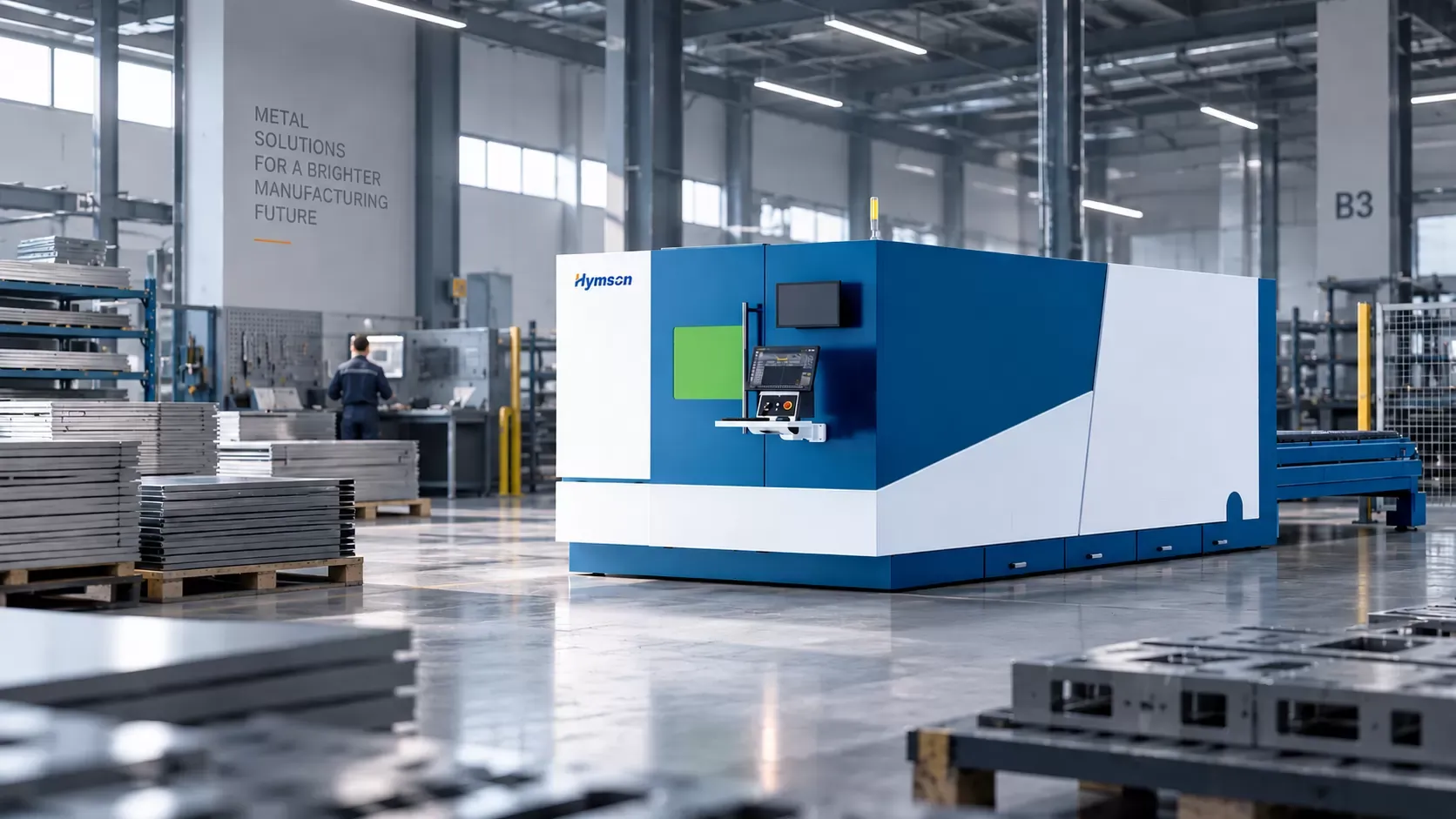
Hymson Laser Machinery positions HyLaser PRO for continuous, high-intensity sheet metal production. Its published range includes 6–20 kW laser power and working areas of 3,200 × 1,600 mm, 4,200 × 2,100 mm, and 6,300 × 2,600 mm.
Use these specifications to narrow the shortlist against your regular materials and sheet sizes. Confirm the available combination of power, format, and accessories in the quotation.
Features worth assessing include:
- Smart Piercing: transitions from piercing to cutting, addressing delays between these operations.
- Auto Recut: detects and recuts incomplete cuts; evaluate its operation on representative materials and geometries.
- Automation expansion: loading, unloading, and related options can support a broader production workflow where the selected configuration permits.
Automatic nozzle changing and automated handling should be checked as options rather than assumed to be included.
The relevant question is how these functions affect your normal orders. A capability that addresses recurring delays deserves more attention than one your production team would rarely use.
How Can a Cutting Trial Help You Choose the Right Machine?
What Should You Measure During a Cutting Trial?
Provide representative drawings and agree on material, thickness, gas, and acceptance requirements before testing. Include common parts and features that regularly cause difficulty in your current process.
For each shortlisted sheet laser cutting machine, record elapsed batch time, accepted quantity, and operator labor. Also measure preparation, loading, cutting, unloading, and finishing to locate delays. Where operations overlap, such as loading during cutting, do not add their durations together as though they occurred sequentially.
Inspect the samples against agreed dimensions and edge requirements. Machine positioning accuracy alone does not establish finished-part accuracy; material condition and the cutting process also affect results.
If a supplier changes the process to improve a sample, record the change. This helps your team understand the conditions needed to reproduce the result.
What Should You Confirm Before Placing an Order?
Before ordering a metal laser cutting machine from Hymson Laser Machinery, confirm the configuration, installation conditions, training, acceptance procedure, and delivery responsibilities in writing.
Keep the production requirement profile alongside the quotation and trial results. Together, they show how the proposed equipment fits your orders and identify any limitations.
Use that record to select the configuration that meets your normal production requirements and agreed growth plans. Purchasing, engineering, and production should approve the same specification before the order is placed.